Early spring is an exciting time for any Canadian driver. The snow is melting and the skies are clearing. However, your car may still be carrying evidence of every salted road it drove on.
Once temperatures rise, salt that’s trapped in your car’s seams, carpet, and undercarriage becomes more chemically active and accelerates corrosion. This spring salt cleaning checklist covers everything you need to know to help prevent damage to your vehicle.
Why Road Salt Is So Hard on Your Vehicle
Does road salt rust your car? Yes, and quickly. Road salt acts as an electrolyte that speeds up rust when combined with moisture. The longer it sits, the more opportunities it has to damage your car. Any pre-existing paint chips are hot spots for rust, and road salt will quickly damage exposed metal if it’s left for too long.
Proactive cleaning can help prevent, or at least slow down, the corrosive nature of road salt. A final cleaning in the spring can drastically reduce this process even more.
The Best Way to Wash Road Salt Off Your Car's Exterior
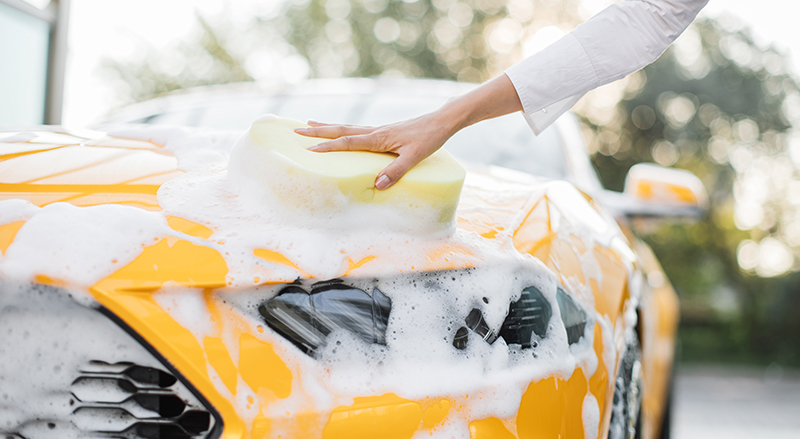
Follow these steps to effectively clean road salt off your car:
- Start with a thorough rinse, working from top to bottom, to flush loose salt.
- Use a dedicated automotive car wash soap or exterior road salt remover, not dish soap, which strips protective wax.
- Use the two-bucket method—one bucket for soap and one for rinsing—to avoid redepositing contamination.
- Pay special attention to wheel wells, rocker panels, and door jambs, since salt collects in these hidden areas.
- Include an undercarriage rinse to remove any hidden salt build-up.
- Finish with wax or paint sealant to protect your work.
Give Extra Care to the Undercarriage
Your car’s undercarriage collects the most salt over the winter but is often the most overlooked area. Salt in frame joints, brake lines, suspension components, and exhaust can be very hard to see and easy to ignore.
Use a high-pressure undercarriage wash, ideally at a facility with an angled undercarriage spray. After cleaning, quickly inspect for flaking, reddish-brown spots, or surface rust on exposed metal. If you catch any of these issues early, you may be able to repair the corroded metal before it spreads and compromises your vehicle’s frame.
Cleaning Road Salt from Your Carpet and Floor Mats
Salt causes staining, odour, and mould (by trapping moisture) on carpets, and corrosion of the floor pan from the inside out if it’s left for too long. To properly remove the salt, remove and clean all mats, vacuum the interior, then treat with a dedicated carpet cleaner or interior road salt remover. Don’t put the floor mats back in until everything has dried.
Make interior carpet cleaning a spring ritual, and consider upgrading to heavy-duty rubber mats before next winter.
Paint Damage and Touch-Ups Before Rust Sets In
After a spring car wash, it’s the perfect time to inspect the exterior for chips, scratches, or bubbling paint that salt may have worsened over the winter.
Use a colour-matched touch-up paint pen to cover any small paint chips. For larger areas of bubbling paint or pitting, always sand, prime, and then repaint to make sure the paint doesn’t peel again. Once any paint spots are repaired and the car is clean, finish with a protective coat of wax.
Spring is the ideal time to remove salt and rustproof your vehicle ahead of next winter. For additional tips on removing salt from your car, visit your local NAPA Auto Parts store to chat with an automotive expert, or browse our selection of car wash soap, floor mats, and touch-up paint at www.NAPACanada.com.


 Author:
 No comments