As a Canadian driver, you and your car face a host of conditions year-round. Heavy road salt, potholes, construction zones, and frost heaves can all take a toll on your vehicle’s suspension.
Keep reading to see what causes wheel alignment issues, the signs that you’re in need of a tire alignment, and how a wheel alignment service can extend the life of your tires.
What Is a Wheel Alignment?
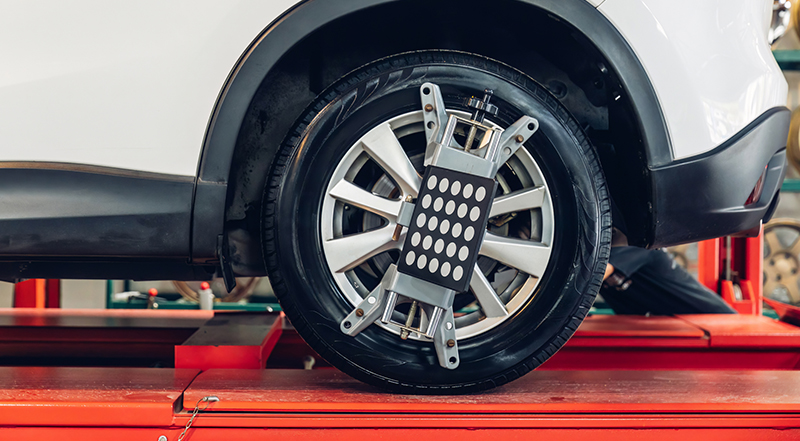
In simple terms, an alignment adjusts suspension angles, not the wheels directly, to control how your tires meet the road.
There are three angles that are involved in a tire alignment:
- Toe: This looks at whether your tires point inward or outward when viewed from above.
- Camber: This looks at whether your tires tilt inward or outward when viewed from the front of the vehicle.
- Caster: This looks at how your steering axis tilt affects stability and steering return.
Not all angles can be adjusted on all types of vehicles. But too much misalignment can have serious consequences for how well your vehicle drives, how your tires meet the road, and how safe your vehicle is.
Signs of Bad Wheel Alignment
Along with confirming your tire angles with a visual inspection, keep an eye out for these common signs of poor wheel alignment:
- off-centre or crooked steering wheel, even while driving straight
- pulling or drifting to one side
- vibrating steering wheel
- rough or bumpy ride
- uneven tire wear
Your tire wear pattern can tell you a lot about your tire alignment issues. For example, excessive wear on the inner or outer edge of your tires suggests a camber issue. If the wear is feathered, then your toe angle is off.
What Causes Misalignment?
Wheel alignment issues can occur for a variety of reasons—most of them being out of your control.
Canadian roads can be tough on vehicles. Potholes and frost heaves are caused by frequent thaws and freeze cycles during the winter and spring, making these seasons especially hard on your suspension. Accidentally running over curbs, deep potholes, or large debris on the road can also cause misalignment.
How Often Should Wheels Be Aligned?
General guidelines recommend wheel alignment at least once a year, or every 15,000 to 20,000 km for average drivers. If you drive on particularly rough roads, then it may be wise to check your tire alignment every 10,000 to 16,000 km, just to be safe. If you’re unsure what your car needs, consult your owner’s manual for the manufacturer’s recommendations.
Any sort of work on your tires or suspension, like installing a new set of tires, steering work, or body modifications, should be followed by a tire alignment. If you’ve been involved in a significant impact, like being rear-ended or T-boned, complete a four-wheel alignment.
Does a Wheel Alignment Straighten Your Steering Wheel?
An off-centre steering wheel is one of the most common symptoms of misalignment. Luckily, proper alignment will return the steering wheel back to its proper centre position.
If it’s still crooked after the alignment, there may be a deeper steering or suspension issue worth a professional inspection.
Tire Balance and Wheel Alignment – What’s The Difference?
Tire balancing addresses the weight distribution around the wheel and tire assembly. On the other hand, alignment addresses the angles of the suspension. Both will affect your ride quality and tire wear, but in different ways. For more information on how tire balance can affect your vehicle, check out our full article on tire balance vs. wheel alignment.
How Long Does a Wheel Alignment Take?
A standard tire alignment can take an experienced DIYer or a mechanic about an hour to complete. But this could turn into a larger job if your suspension components are worn out and need to be replaced.
A Note on ADAS and Modern Vehicles
Many modern vehicles have driver assistance features, including lane departure warnings, adaptive cruise control, and automatic emergency braking. These safety systems rely on sensors that are calibrated to your vehicle’s alignment. After an alignment service, these systems may need to be recalibrated.
Check with an automotive expert on how best to navigate this process or book a professional alignment service at your local NAPA AUTOPRO centre if you’re not comfortable doing it on your own.
Where to Get a Professional Wheel Alignment Service
A professional wheel alignment service is recommended for most drivers, especially those with AWD/4WD vehicles, newer vehicles with ADAS, and anyone without alignment equipment. Professional technicians have an alignment machine to capture precise measurements and can quickly and accurately adjust tire angles for a safe and smooth ride.
DIY Wheel Alignment
Doing a tire alignment on your own is only recommended for experienced DIYers with FWD vehicles. Most modern vehicles are better served by professional equipment and expertise. In general, toe adjustments are the most DIY-friendly and can easily be done by loosening the lock nuts on the tie rods and rotating them until the wheels are in spec.
For a full step-by-step walkthrough, including how to measure camber, adjust rear toe, and know when to stop and call a pro, check out our complete guide on performing a car alignment.
Regular tire alignment extends tire life, boosts economy, improves safety, and maintains smooth steering. For additional tips or questions, visit your local NAPA Auto Parts store to chat with an automotive expert, or browse our selection of alignment tools and suspension parts at www.NAPACanada.com.


 Author:
 No comments