Your vehicle’s suspension and steering systems keep your drive smooth, stable, and safe. These systems work together to absorb road shocks, maintain tire contact, and ensure you can steer with ease, even on rough terrain. Over time, wear and tear on parts like the control arms, shocks, struts, and sway bar links can impact ride quality and safety. Regular maintenance can help keep things running smoothly.
Whether you’re noticing strange noises, uneven tire wear, or a bumpy ride, here’s how to stay ahead of the curve and maintain your car suspension system effectively.

Know the Main Suspension Components
Your suspension system is made up of several key parts:
- Control arms (including upper, lower, and bottom control arms) connect your wheels to the vehicle frame and help manage up-and-down motion.
- Shocks and struts dampen vibrations and keep your tires planted on the road. If these fail, your car will bounce excessively.
- Sway bars and sway bar links reduce body roll when cornering.
- Springs support the vehicle’s weight and absorb impact.
- Ball joints connect the control arms to the steering knuckles, allowing for smooth pivoting.
- Torsion bars are found in some suspension systems and work like springs.
A well-functioning suspension relies on all of these parts working in harmony.
Know the Main Steering Components
Your vehicle’s steering system is a critical part of how you control and manoeuvre your car. Here are the main components that keep your steering smooth and responsive:
- The steering rack and pinion translate your steering wheel input into directional wheel movement. This duo is essential for tight handling.
- Tie rod ends connect the steering rack to the steering knuckle and allow the wheels to pivot. If tie rod ends wear out, you may notice loose steering or uneven wear.
- The steering column is the shaft that connects your steering wheel to the rack and pinion or steering gearbox. It also houses important components like tilt functions and electronic controls in modern vehicles.
- The power steering pump supplies pressure to make steering easier. This pump is exclusively found in hydraulic power steering systems. If the system fails, steering may become stiff or noisy.
- The steering gearbox is common in trucks and older vehicles. This component converts the rotational motion of the steering wheel into linear motion to turn the wheels.
- The Pitman Arm and Idler Arm are found in steering systems with a gearbox. They help to transmit motion to the wheels.
A responsive drive depends on these components working together.
Signs You Need Suspension or Steering Maintenance
Your car doesn’t need to fall apart before it tells you something’s wrong. Common signs of worn-out vehicle control arms, shock absorbers, or ball joints include:
- a bumpy or unstable ride
- knocking or clunking noises over bumps
- vehicle pulling to one side while driving
- uneven or rapid tire wear
- poor handling or excessive body roll when turning
If you’re experiencing any of the above, it’s time to inspect your auto struts, control arms and bushings, or sway bars.
Keep Up With Regular Inspections
A visual inspection can go a long way in catching problems early. Take these steps when checking your suspension:
- Look for leaks around the front struts or rear shocks.
- Check coil springs and leaf springs for cracks, corrosion, or sagging.
- Examine the sway bar links and bushings for excessive play or damage.
- Wiggle the ball joints to test for looseness.
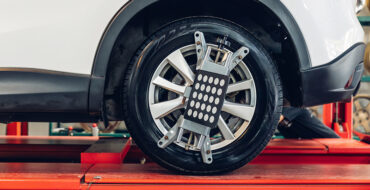
- Check if the wheel alignment is off. This could point to problems with control arms or struts.
Many of these checks can be done during a routine tire rotation or brake inspection.
Replace Worn Parts Proactively
Don’t wait until parts completely fail. If you notice excessive bounce, poor handling, or uneven tire wear, it’s likely time to replace:
- shocks and struts every 80,000 to 100,000 km (or as recommended)
- ball joints if you’ve noticed looseness or clicking sounds
- control arm bushings if steering feels vague or if you hear knocking over bumps
- sway bar links if you detect clunking or excessive body roll
Replacing components like car shocks, torsion bars, or coil springs before they give out can save you from more costly repairs down the line.
Don’t Skip Wheel Alignments
Even if your vehicle struts and control arms are in great shape, a misaligned suspension can ruin your ride. Hitting a pothole or curb can throw off your wheel alignment, which can lead to:
- uneven tire wear
- pulling or drifting
- reduced fuel efficiency
- steering wheel not centred
Have your alignment checked at least once a year—or anytime you install new suspension components.
Use the Right Tools for DIY Suspension Work
Planning to tackle some suspension work yourself? You’ll need a few key tools:
Though there are ways to DIY your car’s suspension, it’s best to leave more complex jobs such as replacing automobile struts or torsion bars to the professionals. Improper installation can be dangerous.
Final Lap: Keep It Smooth, Safe, and in Control
Stay on top of routine maintenance, listen to your car’s signs, and don’t delay necessary repairs. Whether you’re gliding over city streets or tackling rough country roads, a well-maintained suspension and steering system is your ticket to a safer, smoother drive.
For more information, or to select the right tools for the job, visit your local NAPA Auto Parts store. Our friendly experts will be happy to help!


 Author:
 No comments