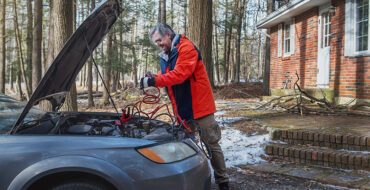

It’s winter, perhaps the most annoying time of the year for drivers, especially if you start the car to begin warming it up and get no response when you turn the key or press the start button. A battery can drain at any time of the year, but it’s more likely in winter.
Tips for Extending Your Battery’s Life During Harsh Canadian Winters
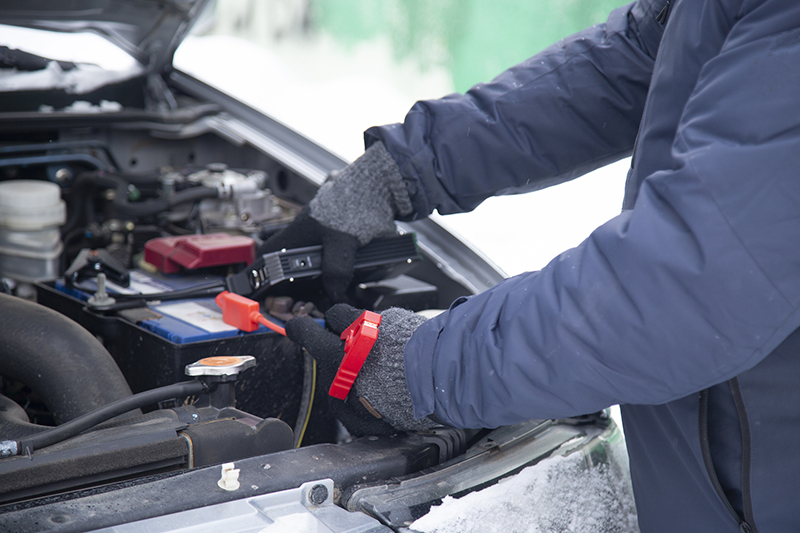
Why Do Car Batteries Die in Winter?
One or more factors can cause a battery to die, but most relate to how much the battery has to work in winter weather.
Extra Electrical Load
In winter, you use your car’s heating system, windshield wipers, window defroster, headlights, seat heating, steering wheel heating, ABS braking system, and more.
Although you use many of these functions in summer—along with the air conditioner—winter weather puts some of them through an extra workout.
For example, your braking system engages more frequently to keep you in your lane on icy roads, and your windshield wipers have to contend with heavy snow. We also assume you don’t heat your seats or steering wheel in summer.
Furthermore, starting a vehicle in winter requires more amperage than in summer. This means a weaker battery may not turn over the engine to start it up.
If the engine starts with difficulty, consider that a warning to replace your battery.
Self-Discharge
Lead-acid batteries suffer from self-discharge, a normal process whereby chemical reactions continue in the battery, even if nothing is connected to it. Extreme temperatures exacerbate this process.
You won’t initially notice self-discharge because it’s a slow, internal process. Only once electrical issues become obvious will you realize that something’s wrong.
Let’s review some tips to slow down damage to your vehicle’s battery.
Park Your Car Indoors
Ambient temperatures have a huge effect on your car’s battery and engine, among other components. A heated indoor parking spot will negate the effects of the cold on the battery and engine oil.
If parking indoors isn’t possible, consider using a battery blanket or an engine block heater.
A battery blanket insulates the battery from wild, overnight temperature fluctuations. Although you can never stop self-discharge, keeping the battery at a more consistent temperature can slow it down.
An engine block heater, on the other hand, keeps the engine warm. This includes the engine oil so that it remains fluid. Because oil thickens in colder temperatures, the starter motor requires more power from the battery to turn the flywheel and get the engine going. Engine oil that flows freely makes this job easier.
Drive Your Car
Idling your car for a long period will warm up the cabin, but it won’t recharge the battery. Driving activates the car’s charging system and tops up the battery.
A trip around the block won’t be enough, though. It’s best to drive around for at least 15 to 20 minutes for the engine to fully recharge the battery, or 30 minutes if you’ve just boosted your battery.
Test Your Battery
Using a battery tester or multimeter, you can verify your battery’s charge and the performance of your car’s charging system.
Multimeters come with different functions, so buying the cheapest isn’t always the best idea. To start, ensure your multimeter has a minimum internal resistance of 10MΩ to provide greater accuracy. This minimum rating also prevents the multimeter from damaging circuits.
Ensure, too, that your multimeter gives the voltage level that is safe for your car. For example, CATIII and CATIV are necessary for high-voltage vehicles.
If your battery doesn’t meet minimum specifications when you test it, follow these steps to replace it. The last thing you want is to be stuck in the middle of an intersection with a dead battery.
NAPA Auto Parts has a wide range of multimeters for you to choose from so you can find the best one for your needs.
Clean Your Battery
Dirt around the battery terminals can reduce the electrical flow. Follow these steps to clean your battery:
- Disconnect the terminals: Wearing safety glasses and gloves, use a ratchet, socket, or wrench to disconnect the positive side first. Don’t bridge the terminals with your tool, as sparks will fly. Next, position the cable away from the battery and then remove the negative terminal.
- Clean the terminals: Make a thin paste with water and baking soda and have a battery terminal brush or similar tool on hand. If your battery has caps, carefully lift them using a flathead screwdriver and clean under there first. Fully close the caps and finish cleaning the terminals.
- Clean the clamps: Using the same paste and either your battery terminal brush or a cloth, clean the inside of the clamps.
- Reconnect everything: Follow the disconnection instructions in reverse to reconnect the battery to the vehicle.
- Protect the battery: Apply a battery protectant to the terminals and clamps to reduce future corrosion and damage.
For more questions about maintaining your battery health, visit your local NAPA Auto Parts store to speak with one of our friendly experts.
 Author:
 No comments