
Roadside emergencies can happen at any time, but they tend to be more common in the winter. From a battery that’s drained too fast to a scary skid into a snowbank, cold weather only adds to the list of unexpected situations you might encounter on the road. Follow this winter emergency kit checklist to prepare for almost any situation, day or night.
Preparing a Winter Emergency Kit
Winter Essentials
In winter, snow, ice, low visibility, and freezing temperatures increase the risk of an emergency. Include the following items in your winter emergency kit to help you get out of trouble or to make waiting for help easier and safer.
Safety
Rain, snow, darkness, or fog are just a few factors that can reduce your visibility on the road. If you’re having trouble seeing, so are other drivers.
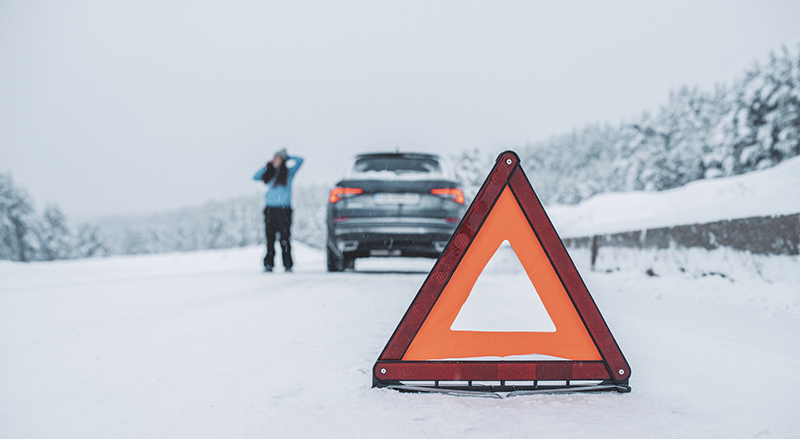
If you need to pull over to manage an emergency, portable lights, safety triangles, and even road flares may come in handy to ensure you can see your surroundings and others can see you.
First Aid
If you or someone else is injured in an accident, a first-aid kit can provide necessary on-the-spot treatment. Bandages, gauze, alcohol wipes, safety scissors, and other items that come in many first-aid kits can make a big difference for minor injuries or while waiting for assistance.
Thermal blankets can also be a valuable addition to your first-aid kit so you can stay warm while waiting for help to arrive.
Battery Support
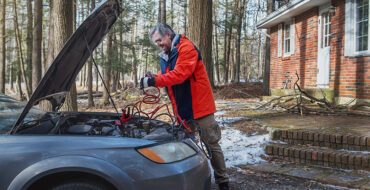
In the dead of winter, it’s not uncommon to find yourself with a dead battery. Include a booster pack, a jump starter, or a set of jumper cables for on-the-road solutions.
Minor Repairs
There are some tools you can keep in your emergency kit for minor repairs:
- For tire problems, include a tire inflator and a tire repair kit. This useful guide will walk you through repairing a flat tire.
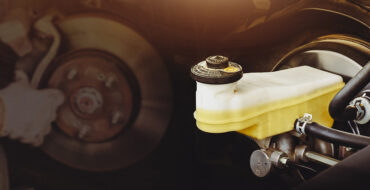
- For under the hood, pack extra fluids such as engine oil, coolant, transmission fluid, and windshield washer fluid.
- For other small repairs, a multi-tool and duct tape may save the day!
Be sure to include a pair of gloves. Your hands will thank you if you have to make any exterior car repairs in the cold!
Navigation
In blowing snow, even familiar routes can look foreign. Whether you find yourself in an unfamiliar area, on a construction detour, or in low visibility, navigation materials can help you get back on track.
To use your GPS or your phone, a portable power bank keeps these devices powered up longer. If your vehicle is fine, and you’re just lost, you can use your GPS to find your way back. A problem with your vehicle feels less severe when you can stay in touch with help that’s on the way.
But still store road maps and a compass as backups In the event that your device dies or you are without signal, you’ll be thankful for these “old-fashioned” methods of way finding.
Clearing Snow & Ice
Whether you just need to brush the snow off your car after leaving it parked for a while, or you need to dig it out of a snowdrift, tools to clear snow and ice are winter essentials. Include a snow brush and gloves for daily snow accumulation when commuting to work or running errands. In more severe situations, insulated gloves, de-icer spray, ice cleats, and a shovel are helpful items to have on hand.
Heat & Food
If you have to call for roadside assistance due to a car or road issue, you might have to wait a while in the cold. A heated jacket, extra gloves and toques, and non-perishable snacks will keep you a little more comfortable.
Start Your Winter Emergency Prevention at Home
Apart from preparing and occasionally checking your winter emergency kit, there are a few additional steps you can take at home to reduce your chances of getting stuck.
- Use a battery charger or battery blanket. The charger can ensure your battery is topped up before you leave, and a blanket keeps the battery warm overnight so it starts easier in the morning.
- Check and top up these fluids before any long car rides.
- Inflate your spare tire. Air pressure decreases in cold weather, and checking your spare tire at home leaves you with one less task to do outside in -15 ˚C weather.
- Replenish snacks as needed. Food has an expiry date, so double-check that your emergency snacks are still good to eat.
- Insulate bottles of water so they don’t freeze. Not only will drinking be impossible: the plastic may crack, leaking water as it melts.
Preparing Your Car for Winter
Ensure you prepare your car for the winter weather in advance. Snow tires, routine maintenance, and addressing necessary repairs can help minimize the risk of a roadside emergency. However, some situations are unavoidable—this is where your emergency kit will come in handy.
If you have any questions about preparing for a roadside emergency, visit a NAPA Auto Parts store for expert advice.
 Author:
 No comments