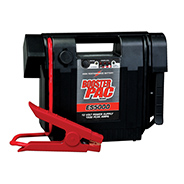
A booster pack, jump starter, or jump box is another common piece of equipment used to jumpstart car batteries. Unlike jumper cables, a booster pack doesn’t need a second battery to work. This eliminates your need to wait for a Good Samaritan to pass by and offer their vehicle to connect to your jumper cables. A booster pack can bring your battery back to life all on its own.
Booster packs can also determine if the polarity of their cables is incorrect. If this happens, the pack won’t deliver any power until the connections are corrected. Jumper cables can’t do this, and you can do a lot of damage to your vehicle if you attempt to jumpstart it when the connections are crossed.
Most booster packs don’t weigh more than 10 kg, but they’re powerful enough to start a V8 engine. They’re incredibly compact, with some being small enough to fit in your pocket.
Booster packs can be used for more than just car batteries. Many come with power sockets, USB charging ports, air compressors, or emergency lighting, making them a multi-purpose tool.
The main disadvantage to a booster pack is you need to manually charge it. If you forget to recharge the pack between uses, it may be dead the next time you need it. Charge the pack at least every two or three months. If your car has a 12 V socket, you can hook up your booster pack to it and charge it while you drive.
Check out this article for more tips on how to get the most out of your booster pack, and this one for how to use one.




 Author:
 No comments