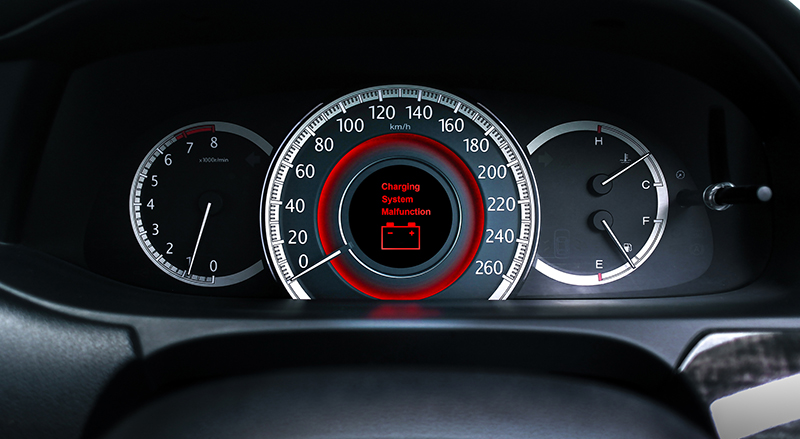
You’re out for a drive, but suddenly your radio malfunctions, cabin lights dim, and your dashboard warning light flickers on. When multiple electrical accessories fail at once, your alternator is likely the culprit. While your car can run briefly on battery power alone, continuing to drive with a bad alternator is both dangerous and expensive.
Still not sure if it’s your alternator? Learn how to tell if your battery, alternator, or starter is having a problem.
Here’s why you should stop driving immediately and what damage you risk if you don’t.
How Long Can You Drive With a Bad Alternator?
Once your engine is running, your alternator converts the engine’s mechanical energy to electrical power. This keeps your battery alive and powers all your vehicle’s electrical systems. But when the alternator fails, the battery must power everything alone, which it isn’t designed to do.
Depending on your vehicle, you may be able to drive for up to an hour at the most with a fully charged battery. However, modern vehicles drain the battery faster because of all the electronic components needed to run the vehicle.
Also note that this isn’t considered “safe driving time.” This is just how long until your car completely shuts down. Modern vehicles with extensive electronics, like infotainment systems, safety sensors, and heated mirrors, will drain power faster.
Once your battery depletes, your car will be inoperable, potentially leaving you stranded in an unsafe location.
Factors That Affect How Long Your Car Can Operate with a Bad Alternator
- If your battery is healthy and fully charged, it will keep your car running longer without the alternator.
- Stop-and-go traffic places more demand on your engine than maintaining steady highway speeds.
- Various electrical accessories, including headlights, A/C, radio, and heated seats quickly drain remaining power.
What Sort of Damage Can Occur from Driving With a Bad Alternator?
The resulting damage to your vehicle occurs in a cascade and compounds over time. That’s why it’s important to stop driving and replace the alternator as quickly as you can.
The Battery Fails First
Your battery must power the entire vehicle alone if the alternator fails. Since your battery isn’t designed for this sustained load, there is a risk of permanent cell damage. Deep discharge cycles harm the battery’s internal plates and reduce its ability to hold a charge in the future. Even if you recharge the battery, its lifespan will be significantly shortened. Your alternator repair bill can quickly rise to include a $200+ battery replacement, too.
Critical Electrical Components Are at Risk
Here are some key electrical systems that will start to fail once an alternator malfunctions:
- Loss of electric power steering can be extremely dangerous at highway speeds.
- Engine may overheat due to loss of the electric cooling fan.
- Fuel pumps can fail, causing stalling.
- Electronic control modules can fail, which is costly to replace.
- Inconsistent voltage damages onboard computers and sensors.
Safety Hazards That Put You at Risk
If your vehicle shows signs of alternator failure, seek out a NAPA Auto Parts store to avoid these safety hazards:
Sudden Stalling in Traffic
If your engine shuts down without warning, this can be extremely dangerous in heavy traffic or while travelling at highway speeds. Loss of momentum in fast-moving traffic increases your risk of collision.
Loss of Power Steering
Electric power steering systems fail when voltage drops, making steering very heavy and difficult. This will lead to much slower reaction times in emergency situations.
Visibility Problems
When the alternator fails, your headlights will dim or flicker. This is particularly dangerous when driving at night or in poor weather conditions, because you won’t be able to see other drivers and they’ll have a harder time seeing you. Canadian winters with early darkness and frequent snow, rain, and fog make reliable lighting essential for safe driving.
The Cost of a Failed Alternator
Alternator replacement typically costs $500–$1,500 for parts and labour, depending on the vehicle. If you can DIY replacing your alternator, you can certainly save some money.
Continue driving, though, and you’ll add a damaged battery ($150–$300), electronic component repairs ($500–$2,000+), and towing fees ($100–$200). Address the problem early or you pay significantly more later.
What to Do If Your Alternator Fails
Knowing what to do if your alternator fails can reduce the chances for further damage.
If you’re already driving:
- Turn off all non-essential electronics, including the radio, A/C, and heated seats.
- Keep your headlights on if needed for safety, especially at night.
- Drive directly to the nearest service centre or safe location.
- Avoid stop-and-go traffic if possible.
- Don’t turn off the engine until you’re where you need to be.
If you’re parked:
- Have your vehicle towed home or to the closest NAPA AUTOPRO service centre for diagnosis.
- Don’t attempt multiple jump starts, because this won’t fix the alternator.
- Test your alternator with a multimeter (should read between 13.8 and 14.5 V with the engine running).
While alternators are designed to last many years (typically 7–10 years or 130,000–240,000 km), various factors can lead to early alternator failure. The important thing is to be aware of the signs of a malfunctioning alternator and act as soon as possible to avoid putting yourself and others at risk.
If you suspect alternator problems, visit your local NAPA Auto Parts store. Our automotive experts can recommend the right replacement alternator for your vehicle.


 Author:
 No comments