
When Canadian winter settles in and your heating system decides to take a vacation, you’re left with a cold cabin and a long list of potential culprits. In this article, we’ll walk you through a list of symptoms and help you understand which parts could call your heating system back to work.
How to Identify Heating System Problems and Choose the Right Parts
Understanding Your Heating System
Your vehicle integrates its heating and cooling systems, which is why we refer to the system as your vehicle’s HVAC: heating, ventilation, air conditioning. For this article, though, we’ll focus on the H.
The core components of your vehicle’s heating system include coolant, the heater core, heater hoses, the blower motor, thermostat, blend door, and HVAC controls. The coolant carries heat from your engine’s core, flows through the heater hoses and core, and transfers the heat to the cabin via the blend door and blower motor. The thermostat controls the temperature.
You can read more about your vehicle’s climate control system here.
Problem 1: No Heat, But Engine Warms Up Normally
A functioning engine but no cabin heat points to coolant. Check your coolant reservoir and top it up if needed with the right coolant for your vehicle. However, if you frequently add coolant, you likely have a coolant leak.
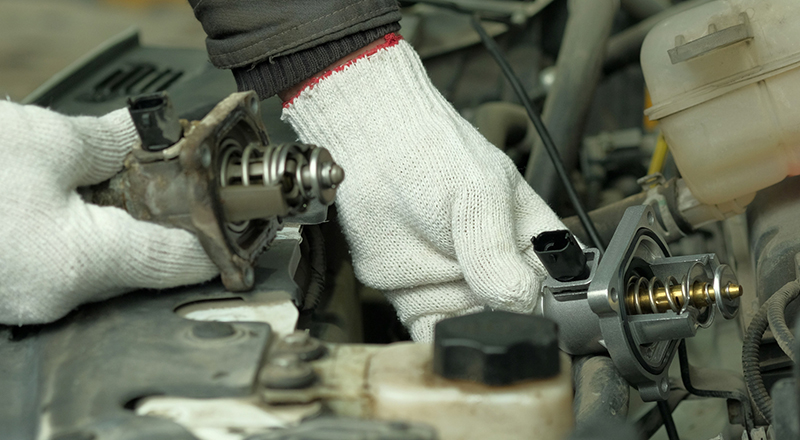
Also inspect your thermostat, but proceed carefully. Your owner’s manual should tell you where your thermostat housing is located. Drain the coolant and carefully replace the thermostat.
Problem 2: No Air Blowing, Even Though Heat Is On
If no air is blowing through your vents, even when the heat setting is on, the issue could be your blower motor. Because inspecting your blower motor may require removing your dashboard, consider leaving this to professionals with fully equipped workshops.
Problem 3: Fan Only Works at Certain Speeds
If the fan only works on high speeds, or skips certain speeds, then your blower motor resistor is to blame. Luckily, this repair is usually much easier than replacing the blower motor itself.
Problem 4: Air Blows, But It’s Not the Right Temperature
If the air blowing into your cabin is always hot or always cold, no matter what temperature you have it set to, it’s time to replace your blend door actuator. This small, electric motor controls the mix of cold and hot air by opening and closing doors in the heater box. You can typically access it through the glovebox area, but consult your owner’s manual for specifics.
Problem 5: Coolant Is Leaking Into Your Vehicle
Leaking coolant can be a sign your heater core needs to be replaced. Several signs can point to a heater core leak:
- Sweet smell inside the cabin and/or damp carpets under your dashboard: This is Have your HVAC system inspected immediately by a professional mechanic.
- Foggy windows: This decreases visibility and requires professional repair, as heater core replacement typically requires dashboard removal.
Choosing the Right Replacement Parts
Once you’ve identified the problem, getting the right replacement part is important.
For example, the type of coolant you use must match your vehicle’s specifications. There are three main types of coolant: IAT (inorganic additive technology), OAT (organic acid technology), and HOAT (hybrid OAT). Never mix different coolants to avoid that damage to your cooling system.
Even thermostats are not a one-size-fits-all component. They’re rated to open at specific temperatures, commonly between 82°C and 103°C. The range must match your vehicle’s manufacturer specifications, or else it could affect engine performance and efficacy.
Bring your vehicle’s year, make, model, and engine size to your local NAPA Auto Parts store so one of our automotive experts can match you with the exact part for your vehicle’s needs.
DIY or Professional? Making the Decision
Some heating repairs are straightforward for DIYers with basic mechanical skills. However, other repairs call for professional help. When deciding which repairs to attempt, take into account your experience, your equipment and workspace, and the cost of a major error vs. professional repairs.
We’ll offer a few tips to help you decide, but remember that the decision is ultimately yours.
DIY-Friendly:
- Coolant top-up and system flush: This is straightforward if you follow proper procedures.
- Thermostat replacement: A replacement includes draining coolant, basic hand tools, and attention to torque specifications, but is manageable for most intermediate DIYers.
- Heater hose replacement: If accessible, this is a relatively simple repair, but access will vary by vehicle.
- Some blower motor replacements: Depending on the location of the blower motor, this may be a simple repair to do on your own.
Strongly Recommend Professional Help:
- Heater core replacement: This is a labour-intensive heating repair, requiring dashboard removal in most vehicles and typically six to eight hours of labour.
- Blend door actuator: The location varies and some models may require significant disassembly.
When to Seek Professional Help Immediately
- You’re rapidly losing coolant: This indicates a significant leak that can lead to engine overheating and severe damage.
- Your engine is overheating: Prolonged operation can cause catastrophic engine damage.
- There’s a sweet smell in your cabin: Leaking coolant causes this and the vapours are dangerous to breathe in.
Diagnosing heating system problems starts with matching your vehicle’s symptoms to likely causes. From there you can make informed decisions about parts and whether to DIY or seek professional help. When in doubt, start with the simple fix. Most heating problems have straightforward causes and identifying them correctly saves you time and money.
Visit your local NAPA Auto Parts store for expert help identifying the right parts for your vehicle and symptoms. Our team can answer your questions and ensure you get exactly what you need to restore your heat.
 Author:
 No comments