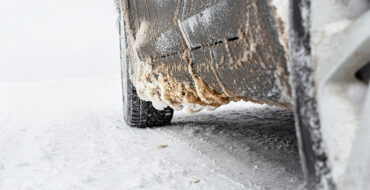

Your tires are the only part of your vehicle that come into contact with the road, yet they’re often overlooked until there’s an issue. Proper tire care isn’t just about avoiding flats: It’s about maximizing performance, safety, and the lifespan of your vehicle. Whether you’re a practised DIYer or you’re just starting to get to know your vehicle, understanding the essentials of tire tread, pressure, and overall longevity can keep you rolling smoothly.
Essential Tire Care Tips: Tread, Pressure, and Longevity

Understanding Tire Tread
Tread isn’t just there for grip, it’s a complex pattern designed to channel road precipitation, maintain stability, and adapt to road conditions.
Tread Depth
The legal minimum tread depth in Canada is 1.6 mm. However, most experts recommend replacing tires once they reach about 3 mm for summer tires or 4 mm for winter tires.
Canadian tire inspection tip: Insert a quarter into the tread with the caribou’s nose pointing down. If you can see the top of its nose, it’s time to start shopping for new tires.
Tread Patterns and Their Purposes
Not all tread is created equal. Your car will likely use one of these three common designs:
- Symmetrical tires have the same pattern across the tire. They’ versatile and long-lasting. You’ll often find them on economy or touring tires.
- Asymmetrical tires have different patterns on the inner and outer halves. They’re optimized for grip in corners and water dispersion and are popular in performance and all-season tires.
- Directional (unidirectional) tires have V-shaped grooves that point in one direction. They’re excellent for wet conditions, but must be rotated front-to-back, not side-to-side.
Knowing which pattern you have can help you understand how your tires should be rotated and what performance traits to expect.
Checking and Maintaining Tire Pressure
Air pressure is one of the simplest and most essential tire checks you can do. Underinflated tires wear faster, overheat more easily, and reduce fuel efficiency. Overinflated tires, on the other hand, can cause a harsh ride and reduced traction.
Finding the Right Pressure
Pressure needs can vary between front and rear tires, especially in trucks and SUVs.
The correct tire pressure isn’t printed on the tire sidewall — that’s the maximum pressure rating. Look for the manufacturer’s recommended pressure on the driver’s side door jamb or in your owner’s manual.
When and How to Check
- Check monthly: Tire pressure naturally drops about 1–2 psi per month.
- Check cold: Measure before driving or at least three hours after your last trip.
- Use a quality gauge: Digital gauges are inexpensive and highly accurate.
Don’t forget the spare tire! Nothing’s worse than discovering it’s flat when you need it most.
Rotation, Balancing, and Alignment
Even with perfect pressure, tires wear unevenly depending on their position on the vehicle. Regular rotation helps distribute wear and extend their life.
- Rotation: Most manufacturers recommend rotating every 8,000–10,000 km (5,000–6,000 miles). For symmetrical patterns, this can be a simple front-to-back swap. Directional tires will need front-to-rear on the same side.
- Balancing: This procedure prevents vibrations by evenly distributing tire weight. It is usually done during installation or when you notice shaking at highway speeds.
- Alignment: This step ensures wheels are angled correctly relative to the road and each other. Misalignment can cause rapid wear, poor handling, and reduced fuel efficiency.
Seasonal Tire Care
Canada’s changing seasons demand flexibility. Switching between winter and summer tires (or choosing all-weathers) is a decision for both safety and comfort.
- Winter tires: Softer rubber stays flexible in cold conditions and deep tread patterns bite into snow and ice.
- Summer tires: Harder compounds improve handling and longevity in warm weather.
- All-season tires: Drivers may choose these as a compromise for moderate climates, but they are not a substitute for true winter tires in harsh conditions.
Store your off-season tires in a cool, dry place, preferably in airtight bags to reduce rubber degradation. If you’re keeping your tires on their rims, stack them horizontally. If you’re storing just the tires, stand them horizontally like books. Do not hang them: you’ll damage their shape.
Spotting Early Warning Signs
A quick visual inspection can save you from costly repairs or dangerous blowouts.
- Cracks or bulges: Sidewall damage means the tire’s structure is compromised — replace immediately.
- Uneven wear: This could indicate under/overinflation, suspension issues, or misalignment.
- Embedded objects: Nails, screws, or sharp debris can cause slow leaks. Remove carefully and patch or replace the tire as needed.
Driving Habits That Extend Tire Life
Your driving style directly affects tire wear. Hard braking, aggressive cornering, and rapid acceleration all shorten tire life.
For example, coasting up to a red light rather than slamming the brakes not only saves fuel, but also reduces flat-spotting on your tires.
The Bottom Line
Tire care isn’t complicated — a little attention goes a long way. By regularly checking tread, maintaining proper pressure, and practising good driving habits, you can maximize performance, safety, and longevity.
Think of it as protecting the shoes your vehicle wears: the better the condition, the smoother every journey. If you need the right tools to get the job done, or want advice before dealing with your tires, visit your local NAPA Auto Parts store and chat with our experts.
 Author:
 No comments