Winter mornings have a way of testing both drivers and their vehicles. Few things are more frustrating than turning a key on a freezing day and hearing nothing but a click. A dead battery in the winter isn’t just an inconvenience, it can leave you stranded.
The good news is that, with a little preparation and the right support, you can dramatically lower your chances of getting stuck.
Here’s what every driver should know about keeping the car battery healthy all winter long.
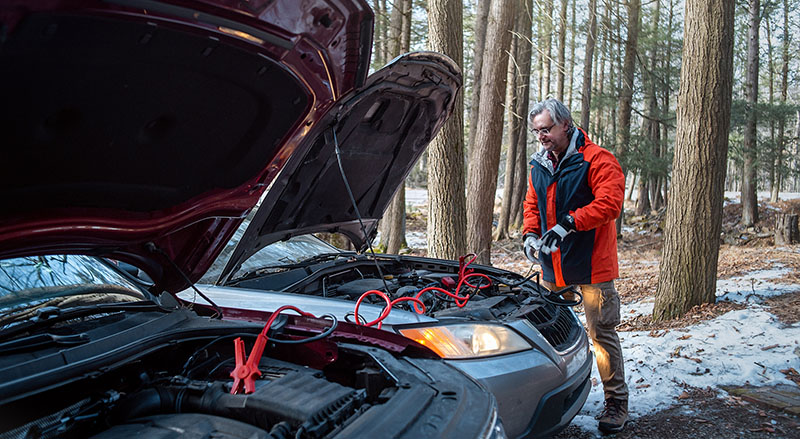
Why Winter Is So Hard on Batteries
Batteries generate power through chemical reactions, and those reactions slow down when temperatures drop. At about 0°C, your battery loses roughly 20% of its strength. At -18°C, it can lose nearly half. Meanwhile, your vehicle demands more electricity in the winter: thickened engine oil makes the starter work harder, while heaters, seat warmers, defrosters, and lights all pull additional current.
That’s why so many batteries fail during the coldest months. They simply don’t have enough power left to keep up.
1. Test Your Battery
You don’t need to visit a shop to get a quick read on your battery. A multimeter will let you know the voltage of your battery.
- 12.6 volts or higher: fully charged.
- 12.4 volts: about 75% charged.
- 12.0 volts or less: Time to recharge or replace.
If you’re not comfortable testing your battery yourself, a professional can check your battery’s charge, voltage, and overall health. If your battery is over three years old, consider replacing it before it leaves you stuck in the cold weather.
2. Keep the Terminals Clean
Dirt, corrosion, and loose connections on your battery terminals can prevent electrical flow. Pop the hood and take a close look at your battery, cables, and connections.
Corrosion looks like white or green powder around the posts. Here’s how to clean it yourself:
- Disconnect the negative cable first, then the positive.
- Mix baking soda with a bit of water and scrub the corrosion away with an old toothbrush or a wire brush.
- Rinse carefully with clean water and dry.
- Reconnect the cables (positive first, negative last).
- Apply a terminal protector spray or a dab of dielectric grease to prevent future buildup.
This quick DIY job takes 10 minutes and can restore a strong battery connection.
3. Drive Long Enough to Recharge
Short trips are tough on batteries in the winter. Starting your car pulls a large amount of energy, but it takes a while for the alternator to recharge it. If you only drive a few blocks, your battery doesn’t get the chance to recover.
Whenever possible, combine errands and drive for at least 20 to 30 minutes. This helps your battery to recharge fully and stay healthy throughout the season.
4. Watch for Warning Signs
You know your ride best. If you notice slow engine cranking, dim headlights when idling, and/or clicking noises when you turn the key, your battery may be on the way out. Install a new battery before the first deep freeze of winter. Check for a replacement that fits your vehicle. Changing one usually takes less than 15 minutes with basic tools.
5. Keep Things Charged With a Battery Maintainer
If your car sits for long stretches, a trickle charger or battery maintainer is your best friend. Plug it into a regular outlet, attach the clamps, and it will keep your battery topped without overcharging. This fix is perfect for a project car, motorcycle, or boat that’s parked all winter.
6. Mind Your Accessories
Even small accessories like dash cams or phone chargers can pull power when your car is off. If you get in the habit of unplugging them before shutting the door, your battery will thank you for it. This easy habit doesn’t cost a thing.
7. Know Your Replacement Options
Just like tires and brake pads, your battery is a component of your vehicle that requires replacement. No matter how well you care for it, your battery has a lifespan of about three to five years. If yours is already in that range, consider replacing it before winter leaves you stranded.
When choosing a replacement, you generally have two options:
- Standard flooded batteries are reliable and affordable for most drivers.
- AGM (absorbent glass mat) batteries are ideal for colder climates and vehicles with high electric demand, such as those with heated seats or advanced infotainment systems. They provide stronger cold cranking amps and longer life.
8. Stay Ahead of the Cold
The best way to avoid a dead battery this winter is to stay proactive. Test your battery before the first deep freeze, clean the terminals, drive long enough to recharge, and replace it if it shows signs of weakness.
Looking for more tips and another set of eyes on your battery before winter hits? Visit your local NAPA Auto Parts store for expert advice.


 Author:
 No comments